
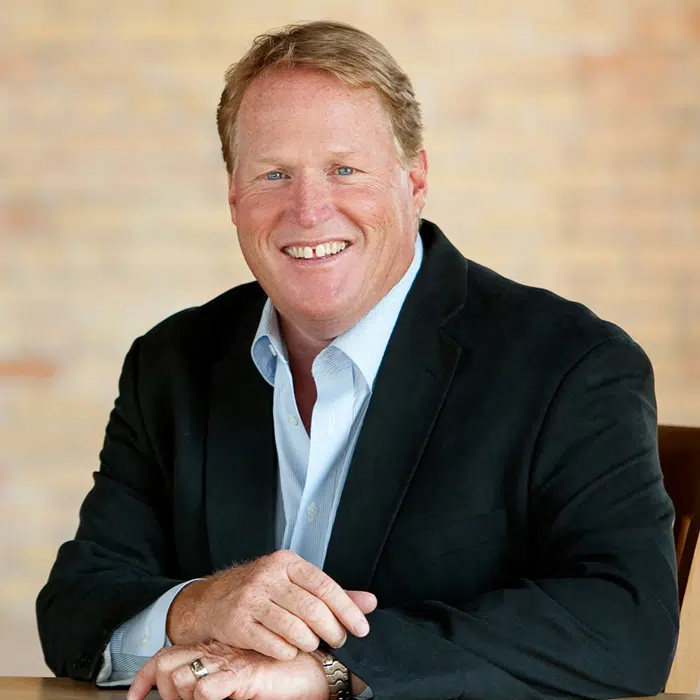
Sarah Aker, executive director of medical services for the Department of Health and Human Services, talks to lawmakers about a federal rural health grant on Sept. 24, 2025. (Photo by Mary Steurer/North Dakota Monitor)
By: Mary Steurer
BISMARCK, N.D. (North Dakota Monitor) – The North Dakota Legislature will form a new interim committee and is anticipating a special session to handle $500 million expected from the federal government for rural health care over the next five years.
The Rural Health Transformation Program, created by the 10-year budget reconciliation law, makes $50 billion available to states to improve health care in rural communities between 2026 and 2030.
It was held out by members of Congress as a means to offset losses rural states will suffer from federal cuts to Medicaid approved elsewhere in the bill.
North Dakota will receive at least $100 million each year from the program, said Sarah Aker, executive director of medical services for the North Dakota Department of Health and Human Services.
The application was released Sept. 15. States only have until Nov. 5 to apply, which must include plans for how they will use their money.
North Dakota could be eligible for more funding based on the quality of its application, Aker said.
“We really want to make sure that we’re setting up North Dakota to be competitive,” Aker told lawmakers during a Wednesday committee meeting.
The money can be used for behavioral health, workforce, infrastructure development, disease prevention and chronic disease, and other areas described in the bill.
Senate Majority Leader David Hogue, R-Minot, announced after Aker’s presentation that Legislative Management would assemble a committee of lawmakers to help the Department of Health and Human Services put together its application.
The committee will likely include members of the standing Human Services Committee, the chairs of the Senate and House appropriations committees and lawmakers who serve on the Human Services Division of the Budget Section, Hogue said.
He acknowledged the state will be under a time crunch to prepare its application, so the committee members should expect a “very aggressive” October meeting schedule.
“They want to get the money out to the states, and they want to see the states spend it in short order,” Hogue said.
Hogue said in an interview he expects a special legislative session, but the timing at this point is unknown.
“There will have to be a special session because the federal legislation says the money has to be obligated,” Hogue said. “We don’t come back until January 2027.”
House Majority Leader Rep. Mike Lefor, R-Dickinson, said the shortened application window provides challenges.
“We want to do it correctly so that it benefits the state to the best of our ability,” Lefor said.
The Department of Health and Human Services also would seek spending authority from the Legislature in future regular legislative sessions.
The Department of Health and Human Services put out a survey to health care providers and members of the public in August to gather ideas on how the state should use the money, Aker said.
Survey respondents identified the retention and recruitment of rural health care workers as a leading priority, according to a presentation to lawmakers Wednesday afternoon.
Aker said the agency will host listening sessions in October to walk through the results of the survey and give the public more opportunities to provide input.
She said previously that the Department of Health and Human Services expects 3% to 5% of the state’s Medicaid population to be impacted by new eligibility requirements authorized in the tax break and spending law.



Comments