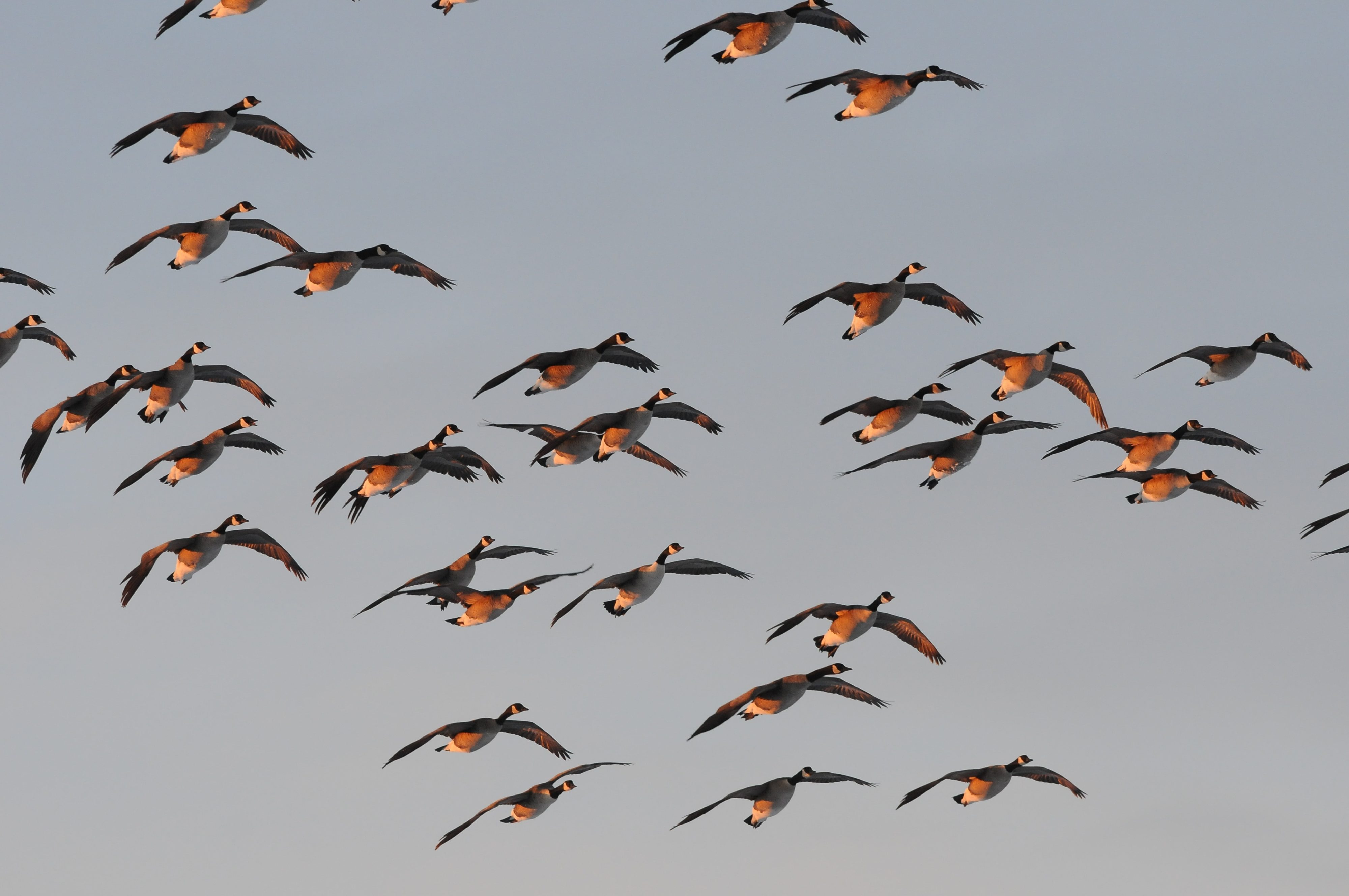
NDGF Geese
By Doug Leier
If you’ve spent any time around North Dakota’s prairie potholes, you probably noticed more hens with ducklings. That’s not just fall hunters wishful thinking. The Game and Fish Department surveys confirm it. Duck brood numbers are up 55% from 2025.
Every spring and summer, North Dakota Game and Fish migratory game bird biologists crisscross the state collecting information through the annual May breeding duck survey and July duck brood survey. Together, the surveys provide a dependable forecast of the birds expected to enter the fall migration. And this fall’s fall flight of ducks is expected to be about 9% higher than last year.
The biggest difference this year came from water. Timely rains during late May and June greatly improved nesting and brood-rearing habitat across much of North Dakota. According to John Palarski, the North Dakota Game and Fish Department’s migratory game bird management supervisor, the state’s mid-July water index increased 36% over last year, creating favorable habitat throughout much of the nesting season.
Far northwestern North Dakota received substantial rainfall and was noticeably wetter than a year ago. Additional precipitation around the Devils Lake region also created excellent wetland
conditions in northeastern North Dakota, where seasonal and semi-permanent wetlands provided outstanding brood habitat. Those improved conditions gave hens and ducklings a much better opportunity to thrive during the weeks that matter most.
Palarski reminds hunters that temporary water can produce outstanding duck numbers during wet years, but North Dakota’s long-term success still depends on protecting prairie wetlands. Those wetlands provide dependable habitat through both wet and dry cycles and remain the foundation of the state’s well-earned reputation as America’s duck factory.
Blue-winged teal and gadwall accounted for nearly 53% of all broods recorded during this year’s survey. Most duck species showed increases compared with 2025, but several stood out. Gadwall broods jumped 97%, while northern pintail and redhead broods each increased 76%. Even more impressive, the redhead brood count was the highest recorded during the survey’s 62-year history.
Hunters know survey numbers never guarantee limits. Migration timing, weather, habitat farther north, and daily conditions across the flyway all influence what eventually arrives. More broods generally mean more young birds entering the fall flight, and young ducks often provide memorable hunting opportunities because they have less experience avoiding hunters.
For anyone who appreciates wildlife, these survey results tell a bigger story. Healthy wetlands, timely rainfall, and productive nesting habitat can make a difference in a single season. This year’s surveys are encouraging evidence that when habitat improves, ducks respond. That’s welcome news for hunters, birdwatchers, photographers, conservationists, and everyone who values North Dakota’s rich outdoor heritage and traditions.
Remember, these are survey numbers and what you find or don’t find in the field is the difference between data collection and hunting.




Comments