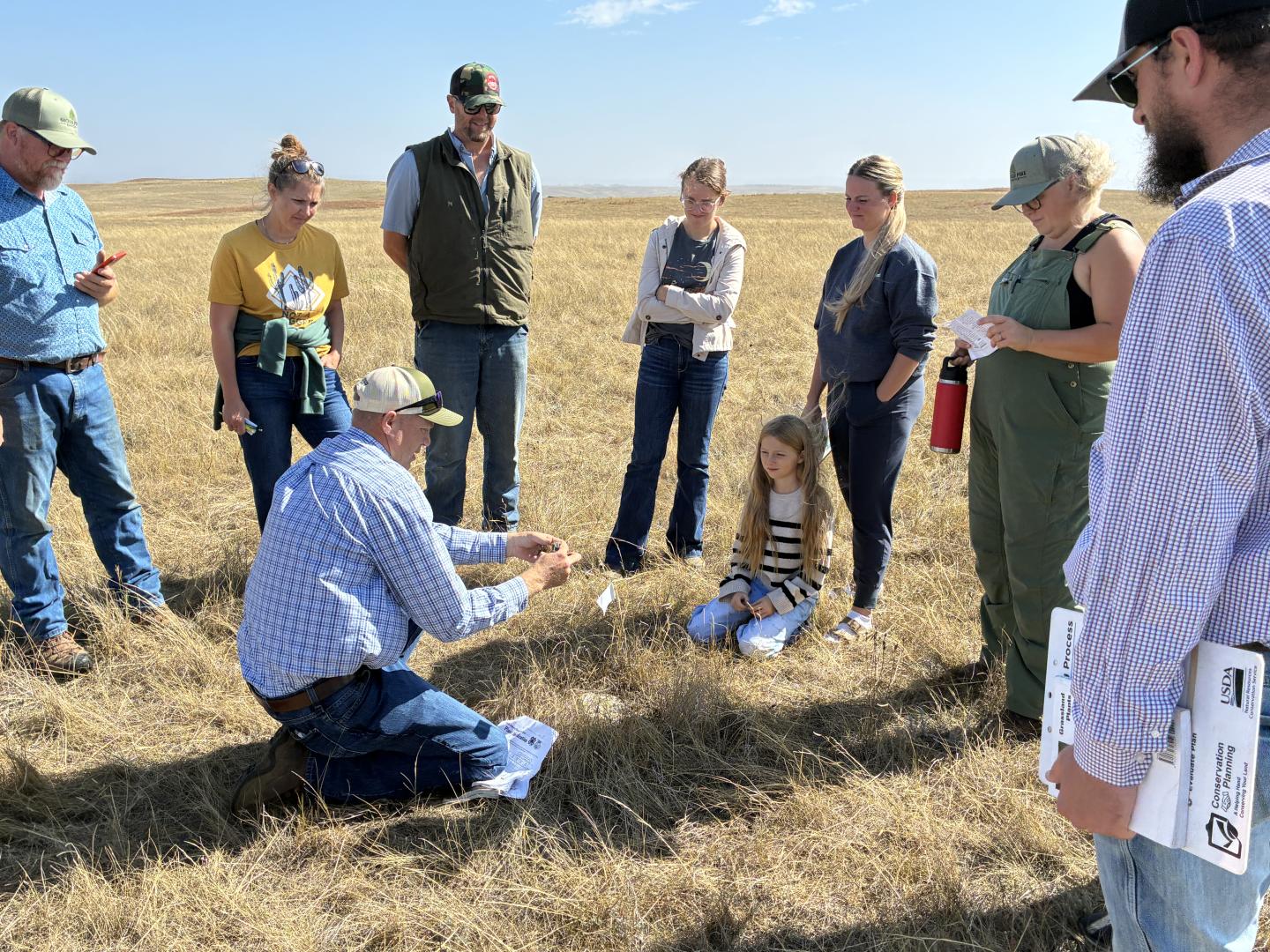
Mike Gerbig, Badlands Conservation Team Lead, shows a prairie grass specimen to a young participant while explaining the differences between native species and early C3 invasive grasses. The hands‑on approach helped attendees see plant traits up close. (photo provided)
Understanding how plant communities influence grazing systems took center stage as the McKenzie County Soil Conservation District (SCD) and the Watford field office hosted a Range Plant Identification Day on September 4. The event brought 18 participants into the field for hands‑on learning about prairie species, grazing principles and the growing threat of early C3 invasive grasses.
The day began at the McKenzie SCD building before participants traveled north of town, where numerous plants had been flagged for discussion. Mike Gerbig, Badlands Conservation Team Lead, guided the group plant‑to‑plant, outlining key identifying traits and explaining each species’ value for wildlife, grazing suitability and soil health.
As the group moved across the prairie, the conversation broadened into grazing management. Several producers shared examples from their operations, detailing what had worked well and what hadn’t. Gerbig emphasized the importance of rest, season of use and utilization, while also pointing out the advantages and drawbacks of various grazing systems.
A major focus of the workshop was early C3 invasive grasses—particularly Smooth Brome and Kentucky Bluegrass—which Gerbig identified as significant threats to rangeland function. Participants examined examples in the field, learning how these species crowd out native vegetation and alter plant community dynamics.
After a morning of field instruction, attendees returned to the SCD building for a pulled‑pork lunch. Event organizers thanked Karissa Frick, Gracee Kuntz and Lloyd Alveshere of the McKenzie County SCD, along with Nicole Darrington, Jason Andrew and Gerbig of the Badlands Conservation Team, for coordinating and hosting the event.
The workshop reinforced NRCS’s commitment to locally led conservation by helping producers better identify plant communities, improve grazing strategies and address invasive species—key steps in keeping North Dakota’s working rangelands resilient, productive and sustainable for future generations.
Source: North Dakota NRCS press release




Comments