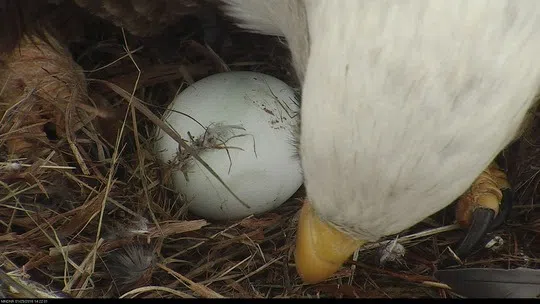
An egg has been laid in the nest featured on the DNR EagleCam. An adult has been consistently sitting in the nest, a sign that incubation has begun.
Bald eagles begin incubating the first egg as soon as it is laid. Based on the eagles’ behaviors, the DNR believes the first egg was laid Sunday afternoon.
Watch the egg-citement unfold at mndnr.gov/eaglecam or on our YouTube page.
What happens next?
If there are additional eggs, they should arrive within the next few days. Eagles usually lay their eggs two or three days apart, but they sometimes lay eggs up to five days apart.
Bald eagle eggs are oval-shaped, dull white and about the size of a tennis ball, usually 2.5-3 inches long. Two eggs is the most common clutch size, but they can lay anywhere from one to three eggs.
Eagle eggs usually hatch after 34-39 days of incubation, so there should be signs of a chick in the nest as early as March 21.
There will be more activity in the nest as one parent incubates the eggs while the other hunts. Both adults will develop an area of bare skin on their chest called a “brood patch.” This allows them to keep the eggs warm using their body heat.
The adults will also turn the eggs frequently to help them develop properly. When turning the eggs, the adults curl up their talons in order to not pierce or injure the eggshell. They use their bill to gently roll the eggs between their feet, then reposition them in the nest before settling back down.




Comments