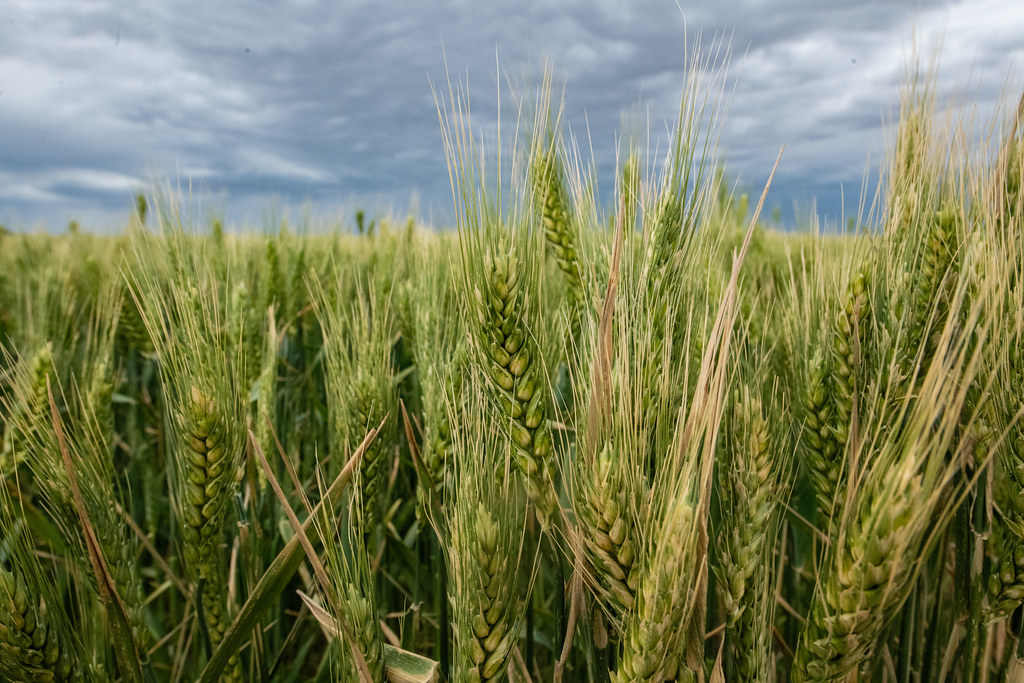
The outlook for 2023/24 U.S. wheat this month is for unchanged supplies and domestic use, higher exports, and reduced ending stocks. Exports are raised 25 million bushels to 725 million on several large recent export sales of Soft Red Winter (SRW) wheat to China. SRW exports are raised 30 million bushels to 175 million, the largest SRW exports since 2013/14.
The global wheat outlook for 2023/24 is for higher supplies, consumption, and trade with reduced stocks. Supplies are raised 1.3 million tons to 1,052.9 million, primarily on higher government production estimates for Australia and Canada partially offset by a reduction for Brazil.
The season-average farm price is raised $0.10 per bushel to $7.30 on lower projected stocks, NASS prices reported to date, and price expectations for the remainder of the marketing year.
This month’s 2023/24 U.S. corn outlook is for higher exports and lower ending stocks. Exports are raised 25 million bushels to 2.1 billion reflecting the pace of sales and shipments to date. With no other use changes, corn ending stocks are reduced 25 million bushels to 2.1 billion. The season-average corn price received by producers is unchanged at $4.85 per bushel.
Foreign corn production is raised with increases for Russia, Ukraine, the EU, and Egypt partially offset by reductions for Mexico and Canada. Corn production for Ukraine and Russia is raised based on reported harvest results to date. EU corn production is higher as an increase for France is partially offset by a reduction for Bulgaria. Mexico corn production is cut mostly reflecting lower area.
U.S. soybean supply and use projections for 2023/24 are unchanged from last month. The U.S. season-average soybean price forecast is unchanged at $12.90 per bushel. The soybean meal price forecast is increased $10.00 to $390.00 per short ton. The soybean oil price is forecast at 57 cents per pound, down 4 cents.
Global soybean production is lowered 1.5 million tons mainly on lower production for Brazil, reduced 2.0 million tons to 161.0 million reflecting hot and dry conditions in southern Mato Grosso and northeast Brazil. Partly offsetting is higher soybean production for Canada and Russia.
USDA news release




Comments