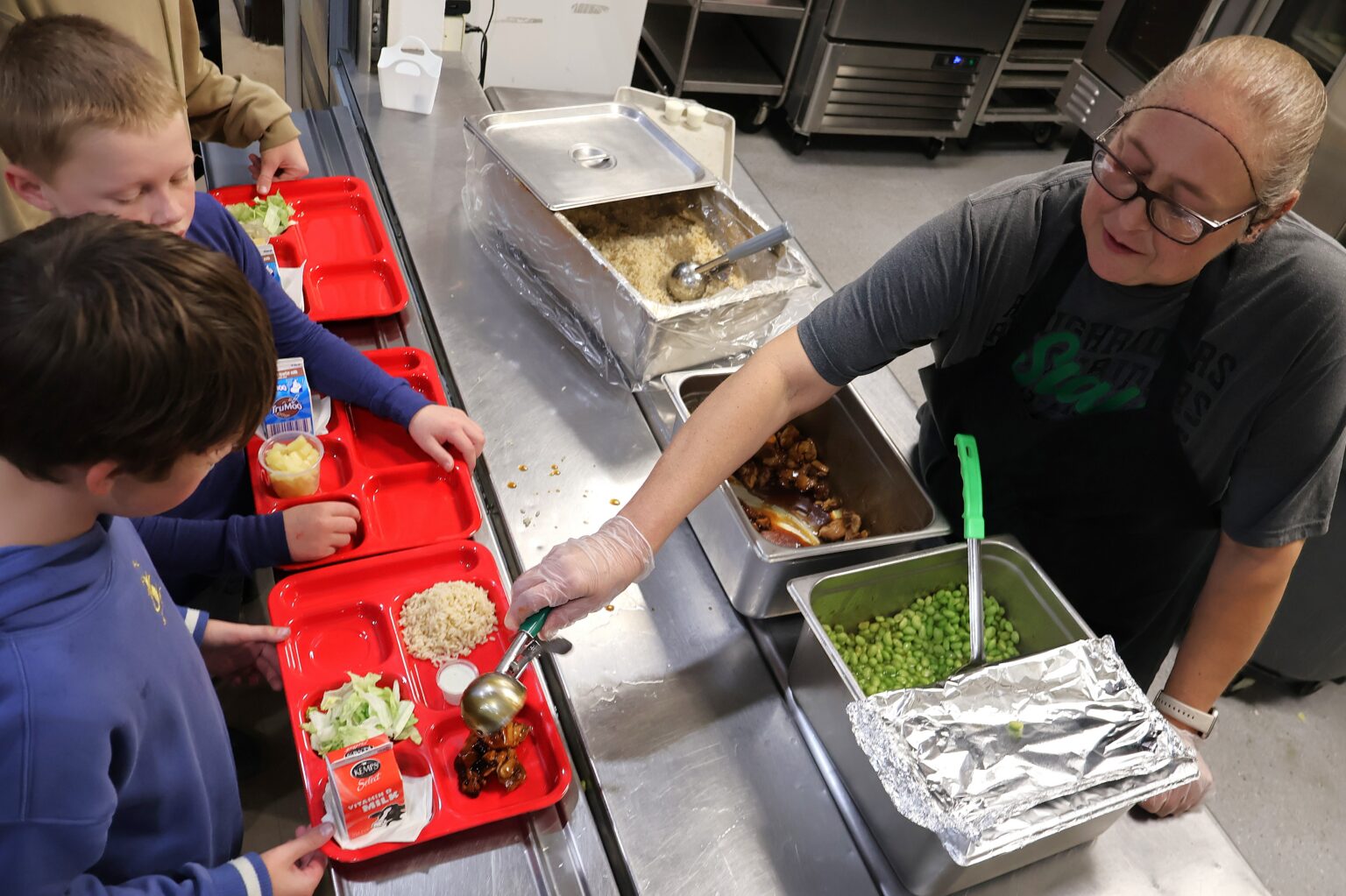
Miranda Jochim of Mandan serves lunch to students at Roosevelt Elementary School in Bismarck on Nov. 2, 2026. (Photo by Michael Achterling/North Dakota Monitor)
BISMARCK (North Dakota Monitor) – North Dakota voters have rejected a proposed constitutional amendment that sought to guarantee free school meals to all K-12 students in the state.
Measure 2 was rejected by nearly 51% of voters, according to complete but unofficial results published by the North Dakota Secretary of State’s Office.
The measure’s margin of defeat was about 2,900 votes.
Measure 2 was a proposed amendment to the North Dakota constitution that would require schools to provide free lunch and breakfast to K-12 students and be reimbursed by the state for the expense.
The initiated measure was placed on the ballot by a group of sponsoring citizens after the North Dakota Legislature rejected similar proposals in recent legislative sessions.
The program was estimated to cost $124.3 million to $134.3 million every two years starting in 2027-29, according to the Department of Public Instruction.
Supporters argued the constitutional requirement will eliminate school meal debts, benefit students’ academic performance and provide financial relief to families across the state.
Opponents including Gov. Kelly Armstrong argued the measure was inappropriate for the state constitution, which is more difficult to change.
Lawmakers have added state funding to expand how many students qualify for free or reduced lunch, bolstering the federal program. In 2025, lawmakers expanded the free lunch program to include families at 225% of the federal poverty level.
Some lawmakers have raised concerns that the state will lose out on federal dollars if families no longer fill out paperwork for the federal program. A state official has said many students automatically qualify because their families are eligible for other federal programs.
A 2023 law already requires North Dakota schools to provide a meal to students if they request one, even if they don’t have the money to pay, and prohibits any shaming of the student.
But schools still charge for the meals if the student isn’t signed up for free and reduced lunch programs. Families can face consequences for the debt, such as being referred to debt collection agencies.
School meals are likely to be the subject of debate again during the 2027 legislative session. Some lawmakers have said they prefer a more targeted approach, such as the state paying off school meal debt at the end of a school year.
Sen. Paul Thomas, R-Velva, has said he plans to propose initiatives ranging from larger portion sizes for school meals and more nutritious options, to trying to help students who go without sufficient meals on the weekends.
North Dakota Monitor reporter Jacob Orledge can be reached at jorledge@northdakotamonitor.com.




Comments