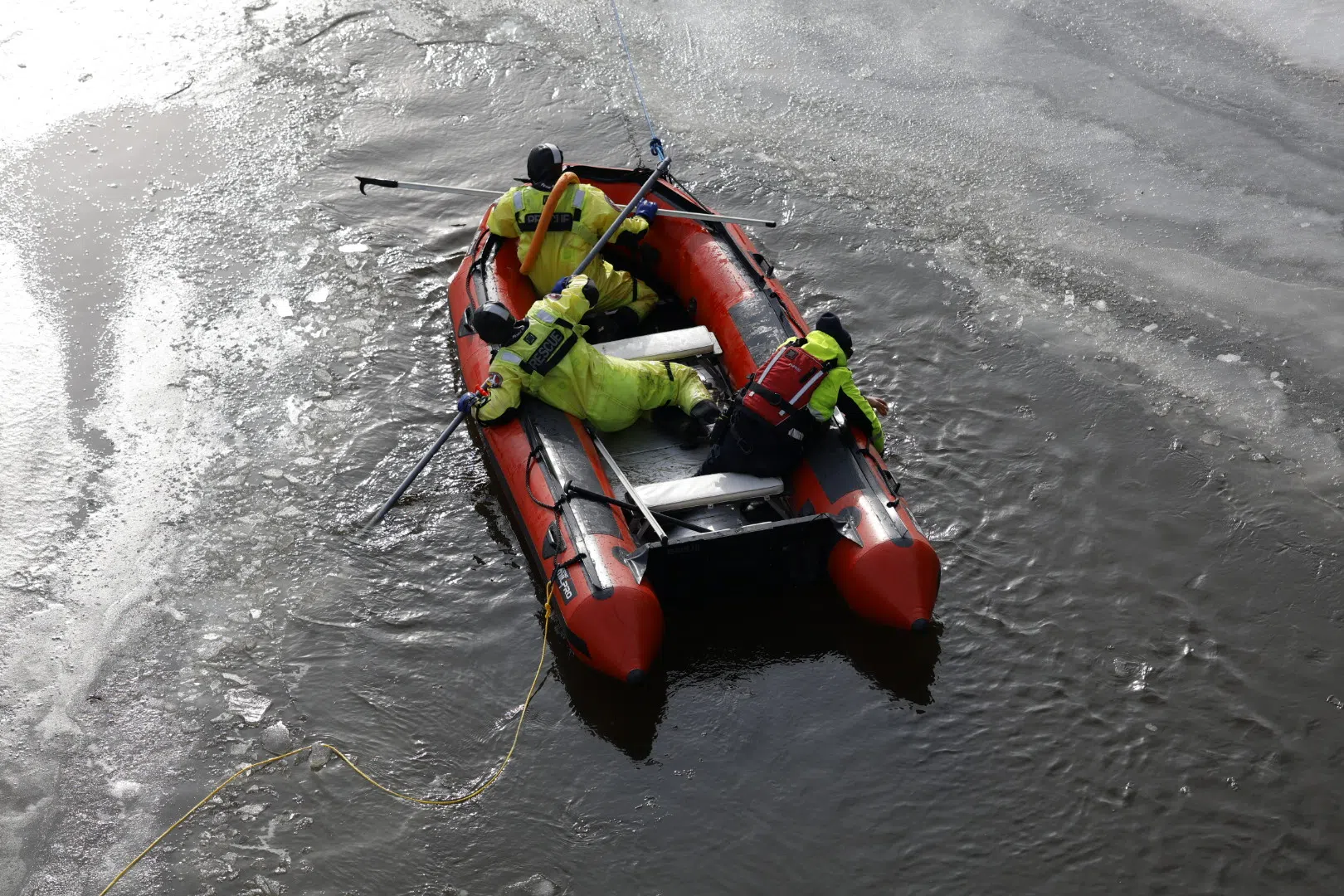
Rescue crews work to break the ice while searching for a man in the Red River near the Main Avenue bridge, March 3, 2026 (KFGO News Photo / Nate Coen)
The ice is gone from most lakes in the southern part of Minnesota and ice on many northern lakes is melting quickly. It’s already common to see anglers and paddlers on open water, but with water temperatures dangerously low, the Minnesota Department of Natural Resources reminds anyone who’s around lakes, rivers and ponds that cold water is dangerous and unexpected falls into the water can quickly turn tragic.
Each year approximately 30 percent of all fatal boating accidents occur during the cold-water period, defined as anytime the water is below 70 degrees. Many of these incidents involve victims who weren’t wearing a life jacket. The best way to survive a fall into cold water is to wear a life jacket and make sure it’s buckled or zipped.
“We know Minnesotans want to take advantage of every day of open water, and it’s great to see people out on the water, getting an early start to the season,” said Lisa Dugan, DNR recreation safety outreach coordinator. “But the message people need to understand is this: Make sure you have the proper safety gear and don’t put your desire to hit the water over the need to be safe.”
As boaters and paddlers head out on water, they should:
- Wear a foam-filled life jacket, rather than the inflatable type. Cold water can prevent inflatable life jackets from fully inflating.
- Ensure that watercraft operators meet safety permit requirements.
- Equip the watercraft with proper safety gear and make sure all equipment is functioning properly.
- Distribute weight evenly and abide by manufacturers’ weight limits to ensure the watercraft’s stability and reduce the likelihood of falling overboard.
- Have a means of communication and ensure someone knows their destination and planned time of return.
- Watch the weather to avoid shifting winds or storms.




Comments