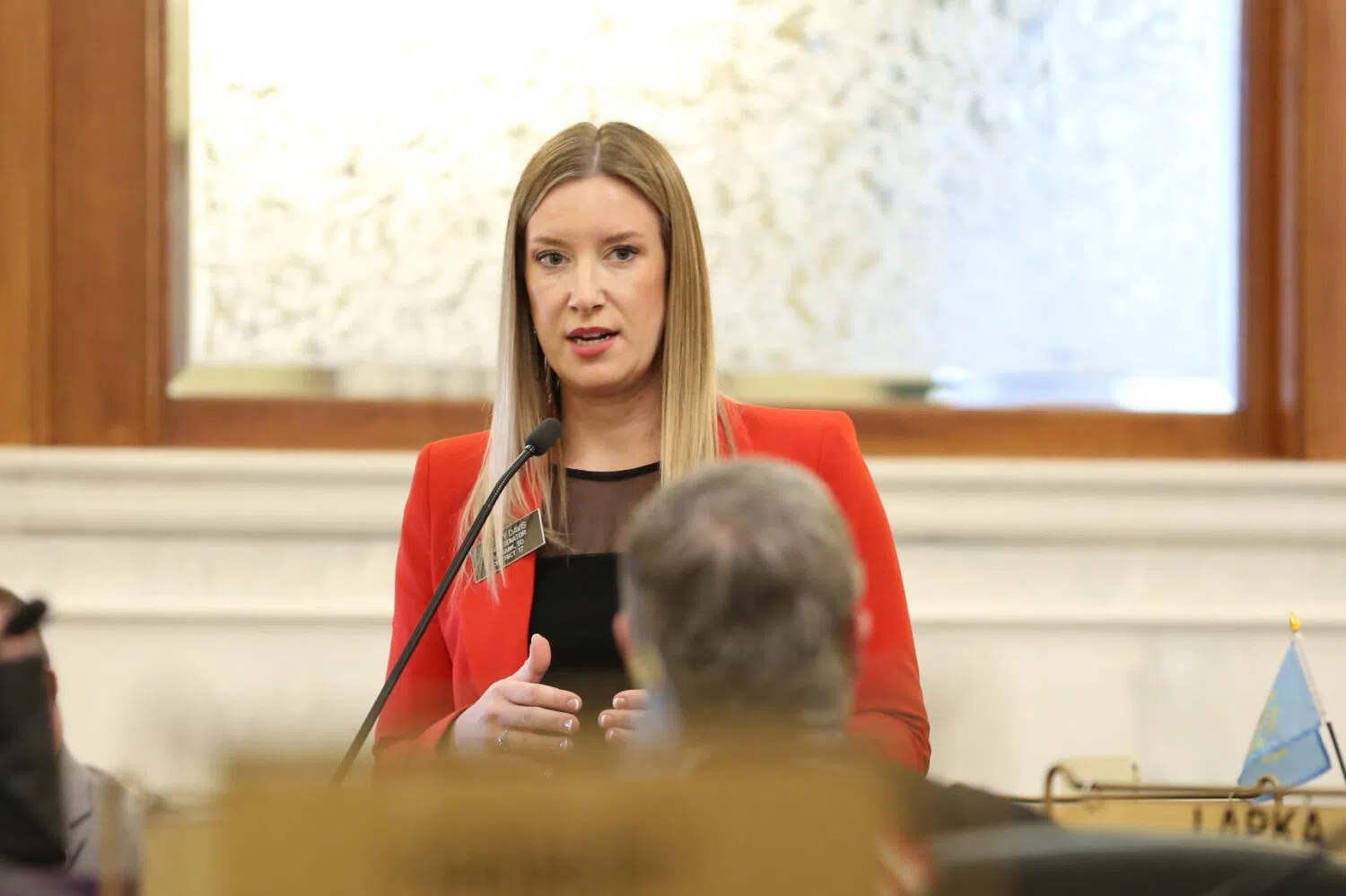
State Sen. Sydney Davis, R-Burbank, speaks in the South Dakota Senate at the Capitol in Pierre on Feb. 10, 2026. Davis is sponsoring a bill that would ban the use of SNAP benefits for soda purchases. (Photo by Makenzie Huber/South Dakota Searchlight)
By: John Hult
PIERRE, S.D. (South Dakota Searchlight) – The question of whether South Dakota moves to ban the use of government food assistance for sugary drinks is in the hands of Republican Gov. Larry Rhoden, who has signaled his opposition to the bill all through the 2026 legislative session.
The state Senate voted 27-6 on Wednesday to endorse House Bill 1056, after the House passed it earlier 58-11. Assuming the same levels of support, both margins are wide enough to overcome a Rhoden veto, should he choose to issue one.
The bill directs the Department of Social Services to ask for a federal waiver to allow the state to bar the use of Supplemental Nutrition Assistance Program benefits for the purchase of soft drinks.
SNAP is a federal program, managed by the state, through which people with low incomes get a monthly allowance for food through a debit-like card that can be used at most stores to buy nearly any consumable grocery item save alcohol and prepared foods.
Representatives from Rhoden’s office testified against the bill in House and Senate committees, arguing that the administrative costs would be too high. A fiscal note attached to the bill between its passage in the House and its appearance on the Senate’s Wednesday calendar estimated that implementation would cost $310,000 through the first two years. Those costs would come from hiring an extra employee and contracting for software to track sales, file reports and help retailers determine which drinks are banned.
Backers see long-term savings to the state, though. A high percentage of SNAP recipients are also on Medicaid, a taxpayer-funded health insurance program open to disabled and income-eligible people.
On Wednesday, Burbank Republican Sen. Sydney Davis noted the connection between excess soda consumption and health problems like obesity, diabetes and tooth decay. Medicaid dental costs alone add up $51 million a year, she said.
Mitchell Republican Sen. Paul Miskimins, a retired dentist, told the body he once counted 32 cavities and seven abscesses in the mouths of 2-year-old twin boys who were covered by Medicaid.
He attributed the tooth decay to sugary beverages.
“I don’t know if that first visit was more traumatic on the boys or on my dental staff and myself,” said Miskimins.
Tamara Grove, R-Lower Brule, was the lone senator to speak in opposition on the Senate floor. She argued that some stores might stop accepting SNAP payments due to the administrative burden of sorting barred products from the rest of their inventories, and pointed out that the bill wouldn’t do a thing to prevent SNAP recipients from loading up on sugary foods like ice cream or snack cakes.
“It gives this look as if there’s going to be this big, huge change in the way that people buy products, but it’s really not going to be,” Grove said.
Some surrounding states, including Nebraska, have moved to ask for a waiver to ban soda sales through SNAP. Such waivers are now an option, as President Donald Trump’s administration is willing to consider granting them. Former President Joe Biden’s administration was not.
Rep. Taylor Rehfeldt, the South Dakota bill’s prime sponsor, got a letter last week from Trump administration officials expressing support for her proposal.
In response, Rhoden spokeswoman Josie Harms told South Dakota Searchlight that the governor “has always been supportive of the Trump Administration’s efforts to Make America Healthy Again,” using a reference to the policy agenda branding used by U.S. Health and Human Services Secretary Robert F. Kennedy Jr.
“We have met directly with his Administration on this issue, and at no point has our opposition been directed at President Trump or his efforts to reform SNAP,” Harms said. “Our focus has always been on ensuring the implementation of SNAP reform works effectively for our state.”
Harms said Wednesday that Rhoden would answer questions about the bill at a Thursday press conference.




Comments