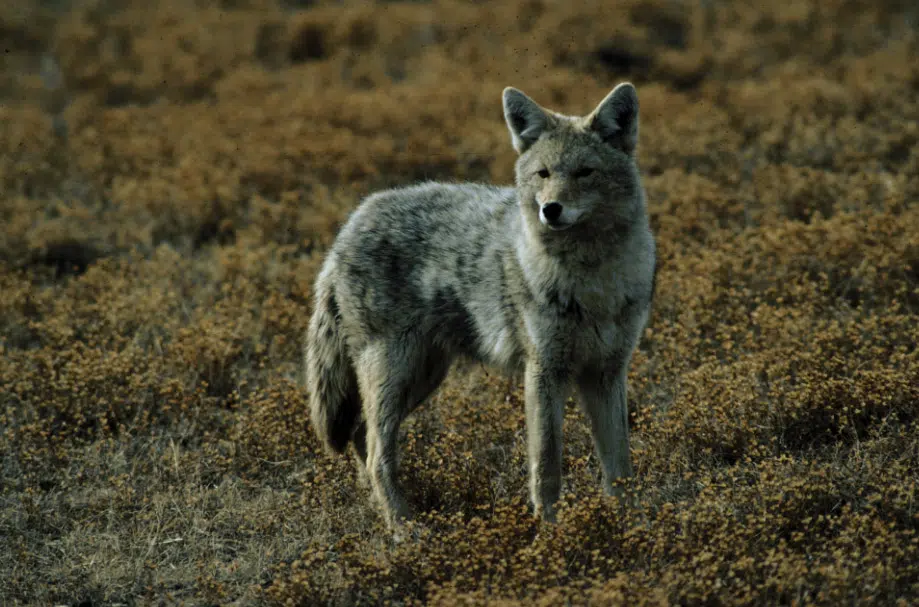
coyote
By Doug Leier
Every few years the question of whether North Dakota should offer a bounty on coyotes surfaces again. It usually follows a tough fall deer season, a hard, cold, snowy start to winter, or a combination of it all. It’s been asked for years.
But from a wildlife management standpoint, a bounty system simply doesn’t make sense — biologically or economically.
Coyotes are adaptable survivors, and they can be tough neighbors for ranchers and hunters alike.
Let’s start with biology. Coyotes are one of the most resilient species on the landscape. Studies from across the Great Plains show that even when populations are heavily reduced, coyotes respond by increasing reproduction rates. Litter sizes grow, and survival among pups improves when competition is lower. In short, widespread killing often creates a temporary dip followed by a rebound — sometimes to even higher numbers than before.
That’s not theory; it’s decades of data. State and federal wildlife biologists have seen that removing large numbers of coyotes rarely results in long-term population control. Their range has expanded, not contracted, despite generations of organized removals and private incentives. Coyotes thrive in grasslands, cropland edges, and even on the outskirts of towns. It’s not realistic to “eliminate” them and bounties have never changed that.
I’ve suggested a parallel in the past when you deal with weeds or dandelions. You can put as much time, money and effort into controlling the yellow flowers and year after year they come back. If your neighbor doesn’t do the same, they continue to spread into your yard. Even after every dandelion is killed, they magically appear. Again. Year after year.
Then there’s economics. Administering a bounty program is expensive and inefficient. Every dollar spent on bounties is a dollar not spent on habitat restoration, access programs, wildlife management, or youth education — efforts that provide measurable benefits to all North Dakotans. Paying for coyote tails or ears might feel like action, but it diverts resources from programs that actually improve wildlife management outcomes.
The North Dakota Game and Fish Department already works closely with USDA Wildlife Services and local landowners to address legitimate livestock depredation issues. Targeted control — where specific problem animals are removed — is far more effective than broad, untargeted bounty programs. It’s about precision, not just numbers.
At the end of the day, managing coyotes isn’t about eradicating them; it’s about understanding how they fit into our ecosystems and addressing conflicts responsibly. Coyotes help control rodents and other small mammals. Like all wildlife, they play a role and our job as stewards is to manage, not to eliminate.
When we focus on sound science and fiscal responsibility, we get better results for wildlife, producers and taxpayers. And that’s what good wildlife management has always been about in North Dakota.




Comments