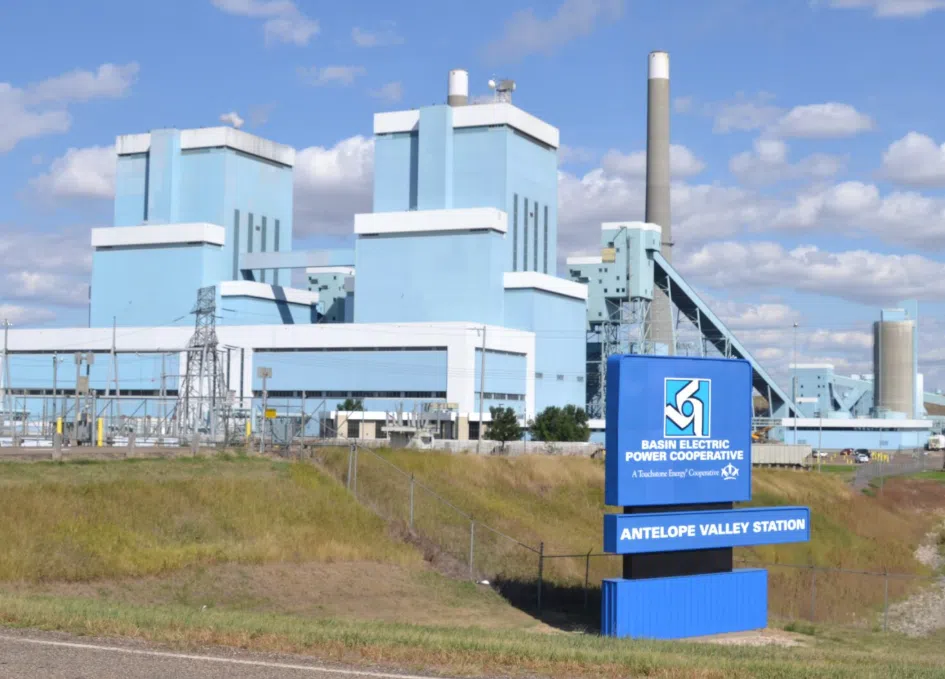
Basin Electric Power Cooperative operates Antelope Valley Station, a power plant near the Freedom Mine coal mine. (Photo by Jeff Beach/North Dakota Monitor)
BISMARCK, N.D. (North Dakota Monitor) – The Environmental Protection Agency recently finalized the repeal of a 2024 regulation that one North Dakota official had called a “death penalty” to the state’s lignite coal industry.
The repeal reverts federal regulations of emissions from coal-fired power plants to the rule implemented in 2012 under the Obama administration.
“This is a really big deal for the state of North Dakota,” said Cyrus Western, administrator of EPA Region 8, which includes North Dakota. “The takeaway is that folks can continue to have clean air while simultaneously allowing for these utilities to burn this fuel source to generate really affordable and reliable power.”
The 2024 rule would have required coal-fired power plants to continuously monitor emissions instead of conducting periodic checks. It also would have eliminated a subcategory of more lenient mercury emission standards for power plants that burn lignite coal, like those in North Dakota, requiring those plants to adhere to stricter limits in place for other types of coal.
Both requirements would have been problematic for North Dakota’s coal industry and would have required investments of up to $1 billion to comply with, the Lignite Energy Council said.
Jonathan Fortner, president of the Lignite Energy Council, a coal industry trade association, called the repeal “a welcome step toward restoring balance in federal energy policy,” and said the pre-existing environmental standards are effective.
“They protect public health and have driven real emissions reductions,” Fortner said.
Both sets of Mercury and Air Toxics Standards regulations, 2012 and 2024, restrict mercury emissions from coal-fired power plants to 1.2 pounds of mercury per trillion British thermal units, a measure of heat used in the energy industry.
But lignite coal, like that mined and burned in North Dakota, has a different chemical composition than other types. Burning lignite can produce more mercury than other types of coal and it is impractical to reduce emissions of the element to the same threshold, Fortner said. The 2012 emissions rules contained a subcategory of rules for power plants that burn lignite, raising the maximum mercury emissions to 4 pounds per trillion Btu.
Removing that carve-out for lignite could have been an existential threat to the industry, Fortner and others have said.
“Implementing the 2024 version would have threatened the livelihood of our power plants and workforce, raised electricity prices for North Dakotans, and jeopardized the 12,000 direct and indirect jobs tied to our industry,” Fortner said.
Dave Glatt, director of the North Dakota Department of Environmental Quality, said in 2024 the rule would be a “death penalty” for the state’s coal industry.
“It’s important to note here, it doesn’t do away with all the mercury standards,” Glatt said in a recent interview. “It basically puts it back to where it was previously.”
He said there was no environmental or health benefit from the 2024 rule.
“The big picture is that this would cost a considerable amount of money to our coal-fired power plants, but would show no environmental benefit,” Glatt said. “If it would have shown an environmental benefit, we would have looked at it differently.”
The EPA’s Western said the higher mercury emissions by lignite coal power plants allowed by the 2012 regulations, which remain in effect, are safe.
“There is no way the administrator would have initiated this rulemaking if we couldn’t look every American in the eye and honestly tell them that the 2012 standard is genuinely protective of air and the environment,” Western said.
Scott Skokos, executive director of the Dakota Resource Council, said the 2024 rule was a necessary safeguard for public health.
“We look at this as like a giveaway to the industry,” Skokos said. “They’re trying to reduce costs for an industry, the coal industry specifically, which is at the expense of public health and the environment.”
The lignite coal industry found other aspects of the 2024 rule, such as the continuous monitoring requirement, troublesome as well. The mercury contained in lignite can vary significantly from seam to seam, and Fortner said there was concern a power plant would face fines for one-time violations, rather than an average of the emissions over time.
The repeal of the 2024 rule amendments was applauded by North Dakota’s congressional delegation.
“The Biden administration’s MATS Rule was designed to be unworkable and ultimately shut down our baseload coal-fired powered plants,” Sen. John Hoeven, R-N.D., said in a press release. “That’s why we worked to repeal this burdensome rule and reinstate the previous regulations, which were proven to cost-effectively protect human health.”
North Dakota was one of 23 states to file a petition asking the U.S. District Court of Appeals to review the rule in 2024. Now the shoe will likely be on the other foot. Phil Axt, with the North Dakota Attorney General’s office, said during an Industrial Commission meeting last month he expects there to be a lawsuit seeking to prevent the repeal of the rule.
“We are waiting for the lawsuits on that,” Axt said. “Then I anticipate North Dakota will be leading a coalition of states in intervention to defend that repeal.”




Comments