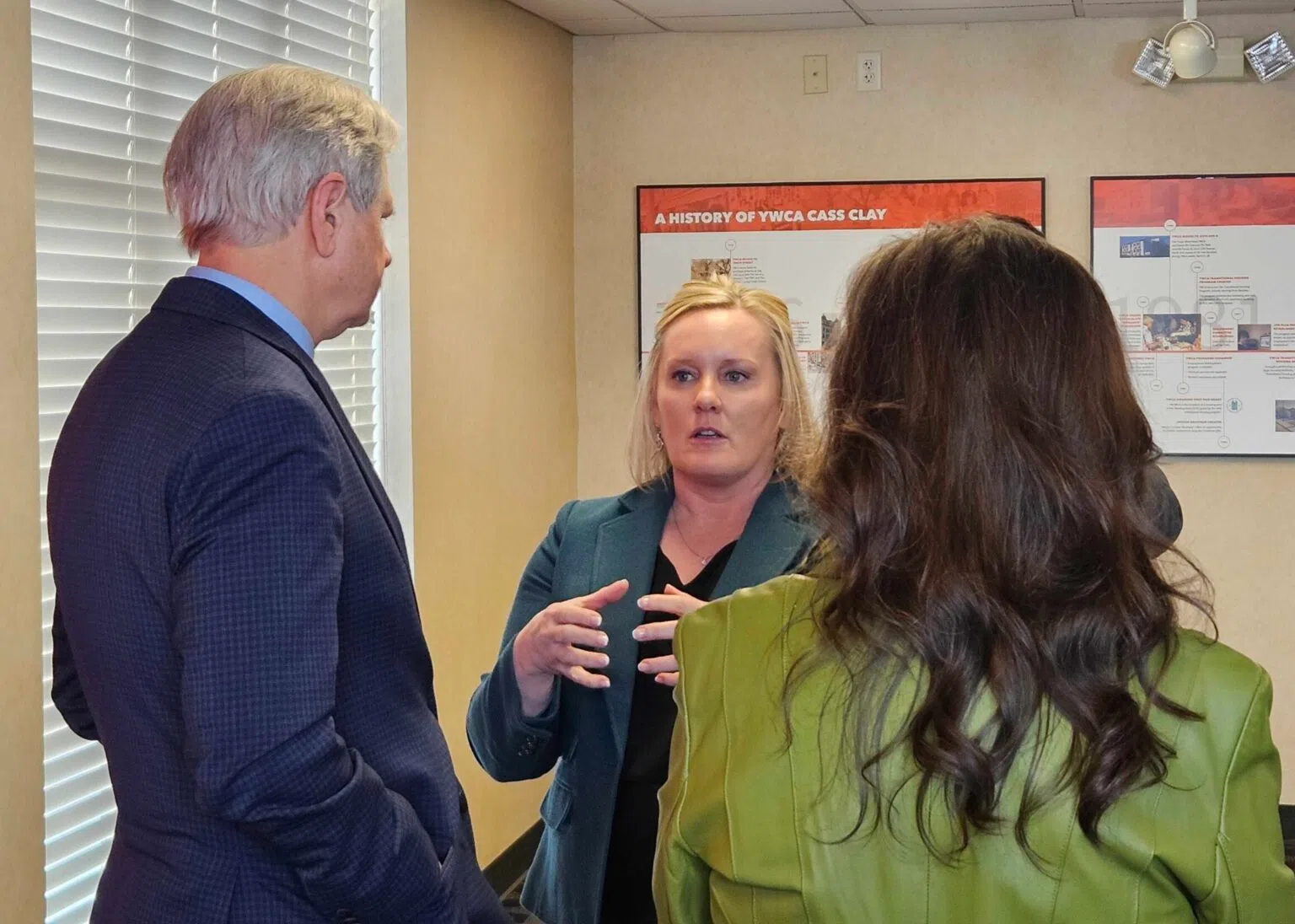
Erin Prochnow of the YWCA in Fargo speaks with Sen. John Hoeven in Fargo on Feb. 20, 2026. The YWCA provides shelter for homeless women and children. (Photo by Jeff Beach/North Dakota Monitor)
FARGO (North Dakota Monitor) — The leader of a group that provides shelter to women and children in Fargo praised the efforts of Sen. John Hoeven to secure federal funding to address homelessness across North Dakota.
“He really went to bat for women and children in danger of losing their housing,” Erin Prochnow, CEO of the YWCA that serves Cass County, said Friday after meeting with Hoeven, R-N.D.
Prochnow credited Hoeven with helping ensure U.S. Department of Housing and Urban Development grants that the YWCA and other North Dakota agencies rely on to serve homeless people were renewed.
North Dakota agencies last year received $3.3 million in federal grants to help the homeless. But those grants were in danger of expiring at different points in 2026.
“For it to be up in the air the way it was throughout this winter, this was the first time I’ve seen that,” said Prochnow, who has been with the YWCA for 18 years.
The money will support 1,600 beds for the homeless at the YWCA and Fraser Ltd. in Fargo, Abused Adult Resource Center in Bismarck, the Grand Forks Hopusing Authority and the Domestic Violence and Rape Crisis Center in Dickinson.
Hoeven said a “fiery” phone call from Prochnow to his staff prompted him to work on the funding through his role on the Senate Transportation, Housing and Urban Development Appropriations Committee.
Hoeven said he has been working with HUD Secretary Scott Turner and other officials in the department to provide more certainty on the grant in future.
“We’re squared away for this year, but we want to know we’re going to continue these grants,” Hoeven said.
Turner visited Fargo last August. During that visit, Hoeven and Turner toured the YWCA’s Lantern Light facility, which has 23 beds to serve low-income women, their children, and domestic violence survivors.
Prochnow said about a quarter of the YWCA’s funding is federal, with most of it going to the housing program.
Hoeven said the HUD delegation made it clear that it was the kind of program they would like to see more of. “So that was very encouraging,” Hoeven said.
Hoeven said HUD is putting new emphasis on programs that benefit veterans, those with disabilities and the elderly.
Sarah Selseth, chief program officer for the YWCA, said the agency’s emergency shelter is housing six women who are 55 or older, including an 81-year-old woman who’s been there for several months.
“This population really presents us with some unique challenges,” Selseth said, such as dementia-like symptoms, physical challenges and chronic health conditions that require daily care and support.
She said the state has in-home support programs for the elderly, but those who are homeless are not eligible.
“There really is a gap in services for this population while they’re in shelter,” she said.
Hoeven also encouraged Prochnow and the YWCA to work with the state Department of Health and Human Services on proposals on how to use some of the federal Rural Health Transformation Program funding.
North Dakota received $199 million for the first year of the five-year grant, which the state Legislature allocated in a special session in January.
Hoeven expects the state to get at least that much funding each of the next four years, and said programs like the YWCA with a proven track record of success will be key in getting the money distributed.
While Fargo is the most urban area of North Dakota, Prochnow noted that people from more rural areas — Native Americans, in particular — come to Fargo seeking help that is not available in rural areas.
About 36% of the families in the supportive housing program are Native American, she said.
She also highlighted the YWCA’s history of partnering with other agencies and providers, such as Sanford Health.
“We don’t act alone,” she said.




Comments