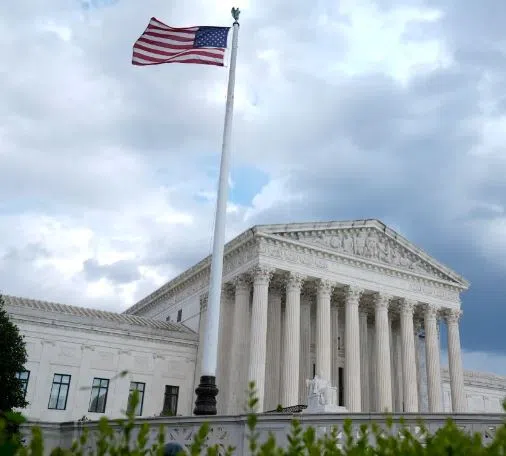
U.S. Supreme Court (AP photo)
The Supreme Court has just ruled that the International Emergency Economic Powers Act does not authorize the President to impose tariffs.
In a new statement, Scott Lincicome, Vice President of General Economics and Cato’s Herbert A. Stiefel Center for Trade Policy Studies says:
“The court’s decision is welcome news for American importers, the United States economy, and the rule of law, but there’s much more work to be done. Most immediately, the federal government must refund the tens of billions of dollars in customs duties that it illegally collected from American companies pursuant to an “IEEPA tariff authority” it never actually had. That refund process could be easy, but it appears more likely that more litigation and paperwork will be required – a particularly unfair burden for smaller importers that lack the resources to litigate tariff refund claims yet never did anything wrong.
Even without IEEPA, other U.S. laws and the Trump administration’s repeated promises all but ensure that much higher tariffs will remain the norm, damaging the economy and foreign relations in the process. Implementing new tariff protection will take a little longer than it did in 2025 and, perhaps, will be a little more predictable. Overall, however, the tariff beatings will continue until Congress reclaims some of its constitutional authority over U.S. trade policy and checks the administration’s worst tariff impulses.”
Cato Institute news release




Comments