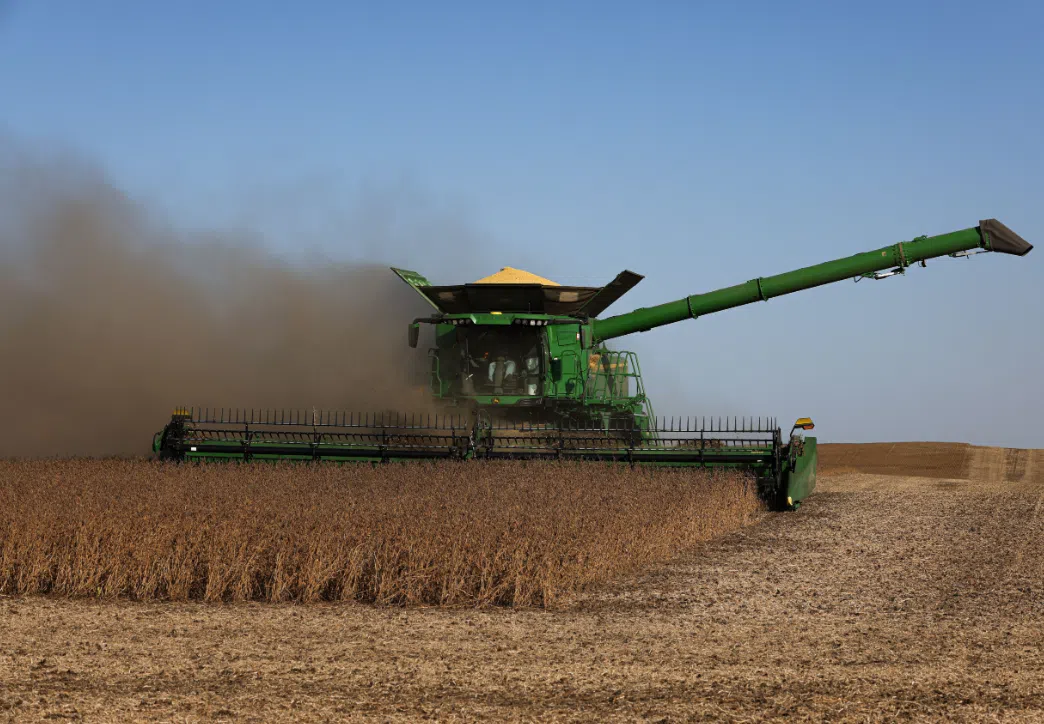
A producer harvests soybeans Sept. 28, 2025, near Hamberg, North Dakota. (Photo by Lora Wobbema/For the North Dakota Monitor)
BISMARCK, N.D. (North Dakota Monitor) – North Dakota farmer Justin Sherlock said he is grateful for the federal ag assistance program announced by the Trump administration, but said it doesn’t replace the need for exports to China and other countries.
“It’s going to keep a lot of people like myself and other producers farming one more year,” Sherlock said Tuesday, a day after the aid announcement. “We still have to continue to work with China to restore that market.”
Sherlock farms near Dazey in east-central North Dakota and is president of the North Dakota Soybean Growers Association. Soybeans have been hit particularly hard by the trade war with China, which has turned to South America for soybeans instead of buying from the United States.
North Dakota is more dependent on China than other soybean-producing states, with most soybeans and soybean meal being shipped through the Pacific Northwest to Asia.
While some other Asian countries buy U.S. soybeans, China remains the key market.
China has resumed buying U.S. soybeans after an agreement was announced in November, but at levels below previous years.
“China is doing everything in its power not to buy from us,” North Dakota Farmers Union President Mark Watne said Tuesday.
Watne said farmers are in a “crisis situation” because of tariffs with China and other countries, making the federal payments necessary. He said his fear is that the $12 billion in assistance won’t be enough.
“If we remain in a situation where we’re not competitive in the global market with agricultural products, we’ll probably be looking for more,” he said.
North Dakota Farm Bureau President Val Wagner said in a statement that the group “supports free-market policies that give farmers and ranchers the freedom to conduct business and participate fully in free enterprise. When markets are free and functioning well, the need for government programs naturally decreases.”
Sherlock also said trade wars that have hurt prices are not the only problem affecting the farm economy.
“Farmers experienced inflation, just like most of the rest of the country did the last few years,” Sherlock said. “So our input costs went up and our revenues went down, and that just has not allowed farmers to be in a place to even break even for a few years now.”
Input costs include expenses for things like seed and fertilizer. He said in previous cycles of low commodity prices, input costs have typically gone down.
“The trade issues kind of multiplied that effect, especially here in North Dakota,” Sherlock said.
After President Donald Trump’s announcement, Sen. John Hoeven, R-N.D., touted improvements to crop insurance and other farm support programs in what Republicans call the One Big Beautiful Bill.
Sherlock said the changes should help make more crop insurance options affordable and reference prices — prices that trigger federal assistance to kick in — have been updated. But he said any payments from those programs wouldn’t come until 2027.
Payments from the $12 billion assistance program announced Monday are expected in February.
Meanwhile the Bank of North Dakota, the nation’s only state-owned bank, has developed two loan programs for the state’s farmers.
“I think that the assistance program will help just as I think the North Dakota programs will help,” Sherlock said. “None of them are going to make farmers whole.”




Comments