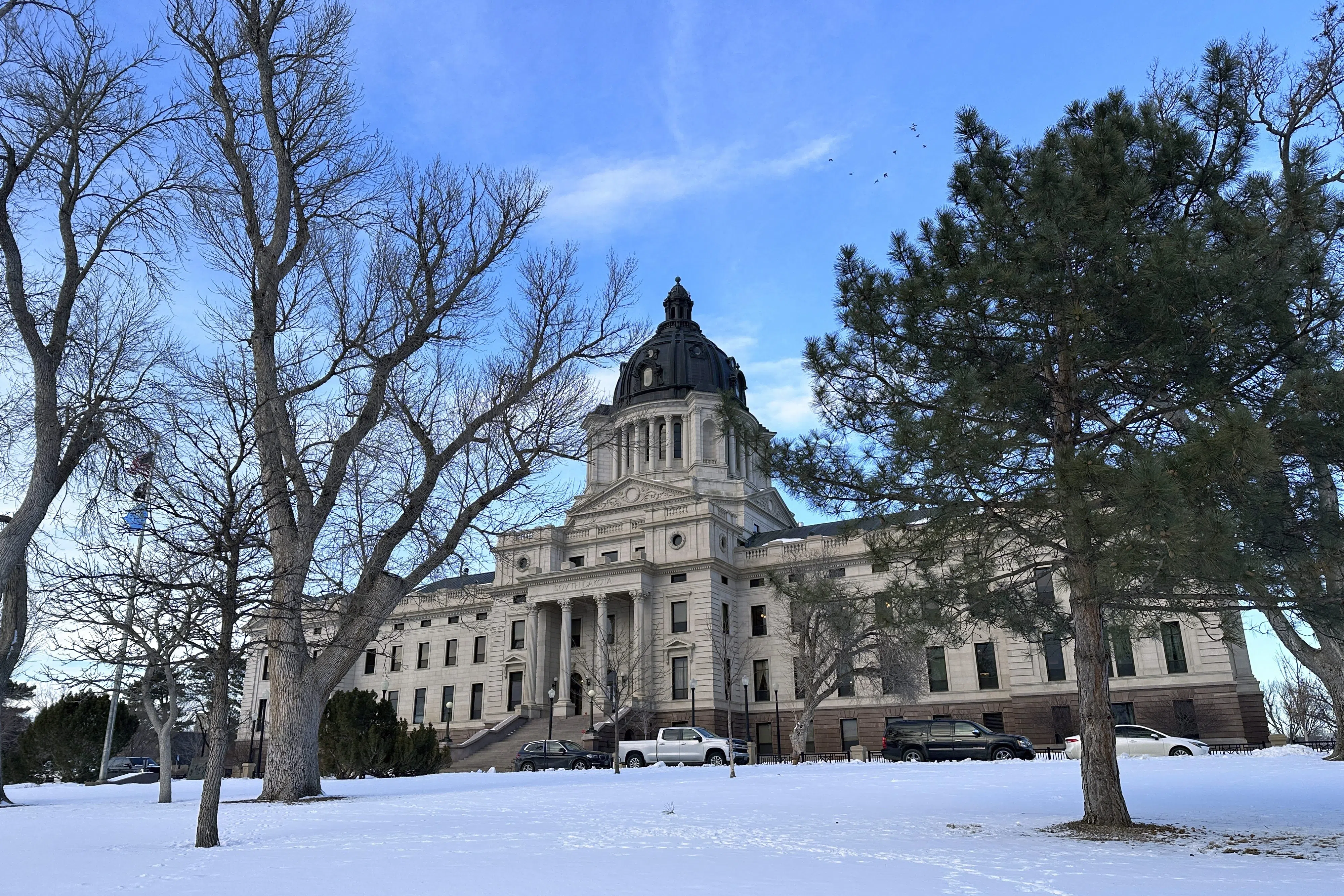
FILE - The South Dakota Capitol stands in Pierre, S.D., Jan. 10, 2024. (AP Photo/Jack Dura, File)
By: Makenzie Huber
PIERRE, S.D. (South Dakota Searchlight) – Two contradictory bills met different fates on Tuesday at the Capitol in Pierre as South Dakota lawmakers continued to wrestle with the best way to provide tax relief.
A bill that would keep South Dakota’s sales tax at its temporarily reduced rate stalled in the Senate with a 17-17 tie vote that the lieutenant governor did not break, amid an ongoing challenge to his legal authority in cases of ties. Earlier in the day, a House committee advanced a bill to increase the sales tax rate over the next two years and use the proceeds to ease the property tax burden on homeowners across South Dakota.
Permanent sales tax reduction
Legislators considered rival tax relief programs in 2023, including a Senate-backed statewide property tax rebate program and a House-backed decrease in the state sales tax rate of 4.5% to 4.2%. Both had a price tag of roughly $100 million. The Legislature at the time adopted the sales tax rate reduction with a three-year sunset clause that’s scheduled to raise the rate back to 4.5% next year.
This is the third year since the sales tax cut that Senate President Pro Tempore Chris Karr, R-Sioux Falls, has tried to repeal the expiration date and make the sales tax reduction permanent, failing in 2024 and 2025. Karr said the permanent sales tax cut is the fairest way to provide relief, since it wouldn’t divert sales tax dollars — paid by renters, tourists and others who may not own property — toward property tax credits.
Karr told lawmakers raising the tax would stagnate the economy and that the state has “been able to meet our obligations,” citing better-than-anticipated revenue projections adopted by the legislative budget committee last week.
Other lawmakers pointed to the opposite. Sen. Paul Miskimins, R-Mitchell, referenced lagging maintenance and repair funding for government buildings and proposals for lower-than-inflation increases for public education, state employees and Medicaid providers.
“I really appreciate that when we can lower taxes it makes all of us look good and it makes the people of South Dakota feel better about what we do up here,” Miskimins said. “But I don’t think this is that time. I think this is a time for vision, courage and discipline to do the right thing for the health of our state.”
When the vote tally on the bill was announced as a tie, Lt. Gov. Tony Venhuizen, who presides over the Senate, paused before declaring the bill’s fate. Earlier this legislative session, Karr challenged the lieutenant governor’s legal authority to break a tie, and Gov. Larry Rhoden asked for an opinion from the state Supreme Court, which the court has yet to deliver. The issue arose due in part to the prolonged health-related absence of Sen. Arch Beal, R-Sioux Falls, which has reduced the number of senators from 35 to 34.
Venhuizen ultimately declared the sales tax reduction bill defeated due to its lack of an 18-vote majority of members-elect. Karr announced his intent to seek a later reconsideration of the bill.
When asked by South Dakota Searchlight whether the dispute over his tiebreaking authority influenced his non-vote on Karr’s bill, Venhuizen said, “I guess I’d just say that discretion is the better part of valor.”
Two-stage sales tax increase for property tax relief
Lawmakers in the House Taxation Committee voted 10-2 earlier Tuesday to advance House Bill 1308. It would set general and special education property tax mill levies to zero on owner-occupied homes and replace the revenue with an increase in sales tax collections to 5%. The increase would occur over two years, increasing the sales tax from 4.2% to 4.7% this July and to 5% in July 2027.
Rep. Tim Czmowski, R-Sioux Falls, said the bill would also direct a portion of the increased sales tax revenue to annual funding increases for public education, state employees and Medicaid providers. But, as with a 3% annual increase already set in law for education funding increases, future Legislatures could determine if that money needs to be spent elsewhere.
Overall, the proposal would raise state sales tax revenues by $337 million in the first two years and reduce property taxes by 29-44% per home on average throughout the state, Czmowski said. South Dakota currently has the 36th highest sales tax rate in the nation.
“It balances the revenue with a sales tax adjustment that remains competitively low amongst our neighboring states and the nation as a whole,” Czmowski said. “Additionally, it provides time for a sensible cost cutting and economic development stimulus to improve our overall budget.”
Derek Johnson, state economist with the Bureau of Finance and Management, said the proposal is too broad, since property tax concerns are limited to areas in the state experiencing the highest valuation increases over the past few years. He added that the proposal would require “significant administrative work for the state and for retailers,” since there would be two sales tax increases.
Johnson said the bill “raises questions about enforceability, equity and administrative feasibility.”
No other proponents or opponents testified on the proposal. The bill will head to the House floor next.
Other property tax bills considered
Lawmakers on the committee rejected another property tax proposal in a 9-3 vote, which would have rolled back home valuations to 2020 levels for people who have lived in their home since then and capped annual valuation increases.
Wendy Semmler, property tax division director for the state Department of Revenue, said the proposal would favor wealthier, older property owners over younger families and first-time homebuyers since less expensive homes tend to turn over more often.
“This bill will permanently lock in inequity into our property tax system,” Semmler said.
The Senate shot down another bill that would have raised the state’s cap on property tax increases attributable to new construction and growth, in response to complaints from some local officials that the cap restrains their ability to provide services necessary to accommodate rapid population increases. The bill, which required two-thirds support due to its effect on taxes, failed on an 18-16 vote.
Three other property tax bills survived the Senate on Tuesday and will go to House committees:
- Senate Bill 20 would appropriate $425,000 for a property tax refund program for older adults and people with disabilities.
- Senate Bill 183 would expand taxpayer notice requirements before a vote to exceed property tax levies by requiring notification be sent to all property owners by mail or electronically at least 21 days before a public hearing on the matter.
- Senate Bill 223 would reduce the number of petition signatures needed to refer a school district’s decision to “opt out” of property tax limitations to an election and lengthen the time petitioners have to gather signatures.




Comments