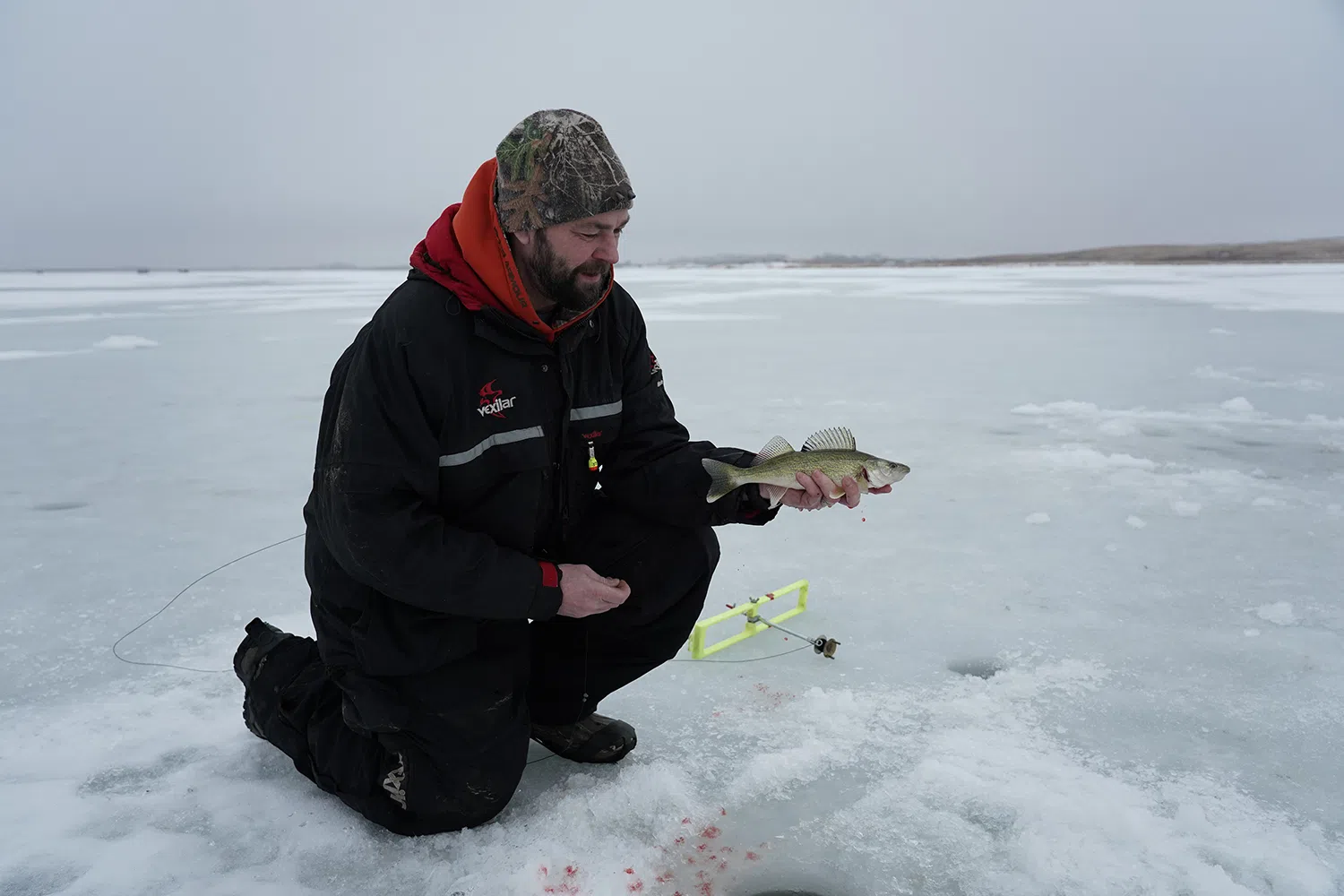
As much as we look forward to it each year, early ice season always brings a mix of excitement and concern.
The excitement is understandable. For many North Dakotans, there’s something about that first layer of ice stretching across a favorite slough or lake that gets the blood pumping. Anglers start texting buddies, checking gear, and making weekend plans. It’s hard to beat the anticipation of being first on the ice and pulling up a few perch or walleyes before the crowds arrive.
Safety is always the priority. First ice is even more important. Every year, the North Dakota Game and Fish Department, along with local law enforcement and emergency services, receives reports of vehicles, ATVS and anglers breaking through thin ice. These incidents play as reminders that no fish is worth risking your life.
It’s an old saying in outdoor circles: “No ice is ever 100% safe.” And while it might sound like a cliché, it’s still true.
Ice Thickness Matters
There are some general guidelines we follow when it comes to ice thickness and safety:
● 4 inches of clear, solid ice is the minimum for walking.
● 5 to 6 inches can support a snowmobile or ATV.
● 8 to 12 inches is recommended for small vehicles.
● 12 to 15 inches for pickups and larger trucks.
Keep in mind these are recommendations for clear, solid ice – the kind that forms after a good stretch of cold, calm weather. Milky or honeycombed ice is significantly weaker, and snow-covered ice takes longer to build thickness underneath. Moving water, such as in rivers or near inflows/outflows on lakes, can also affect ice formation and strength.
Have The Right Gear
If you’re heading out on early ice be prepared for everything possible.
● Ice picks worn around your neck can help you pull yourself out if you fall through.
● A throw rope or flotation device can save a buddy, or allow someone to help you, without putting another person at risk.
● A spud bar or ice chisel lets you check ice thickness as you walk.
● Consider wearing a life jacket or float coat. It might feel odd on the ice, but it could save your life.
And don’t go alone. Let someone know where you’re going and when you plan to return. Cell service might not be accessible in some areas, so it’s always smart to leave a plan with a friend.
Don’t Push It
One of the best habits you can develop is patience. Start small. First, check the ice with a spud bar. Also use a hand auger and walk out to test the ice as you go farther. Use a sled instead of a wheeled ice house. Wait for truck use until you’re sure the ice can handle it.
The Bottom Line
We all want to make the most of another North Dakota winter. For many, that means spending time outdoors, chasing panfish, pike and walleyes, and passing on the traditions to the next generation.
Just remember that ice is never 100% safe. Respect the ice, use common sense, and take your time.




Comments